Author Biography
Nan Jie, a poet born in Sichuan in the 1980s and raised in Guangdong in the 1990s, currently lives in Taiwan. He began publishing prose and poetry at an early age. In the 2000s, he published several collections of poetry before dropping out of high school. He then spent several years wandering from place to place. Later, he earned a PhD in Literature in Shanghai, specializing in Chinese rock music. He subsequently moved to Taiwan, where he reads in quiet moments and wanders when he is on the move. From 2023 to 2025, he completed The South, his first long poem, in Taipei.
The South
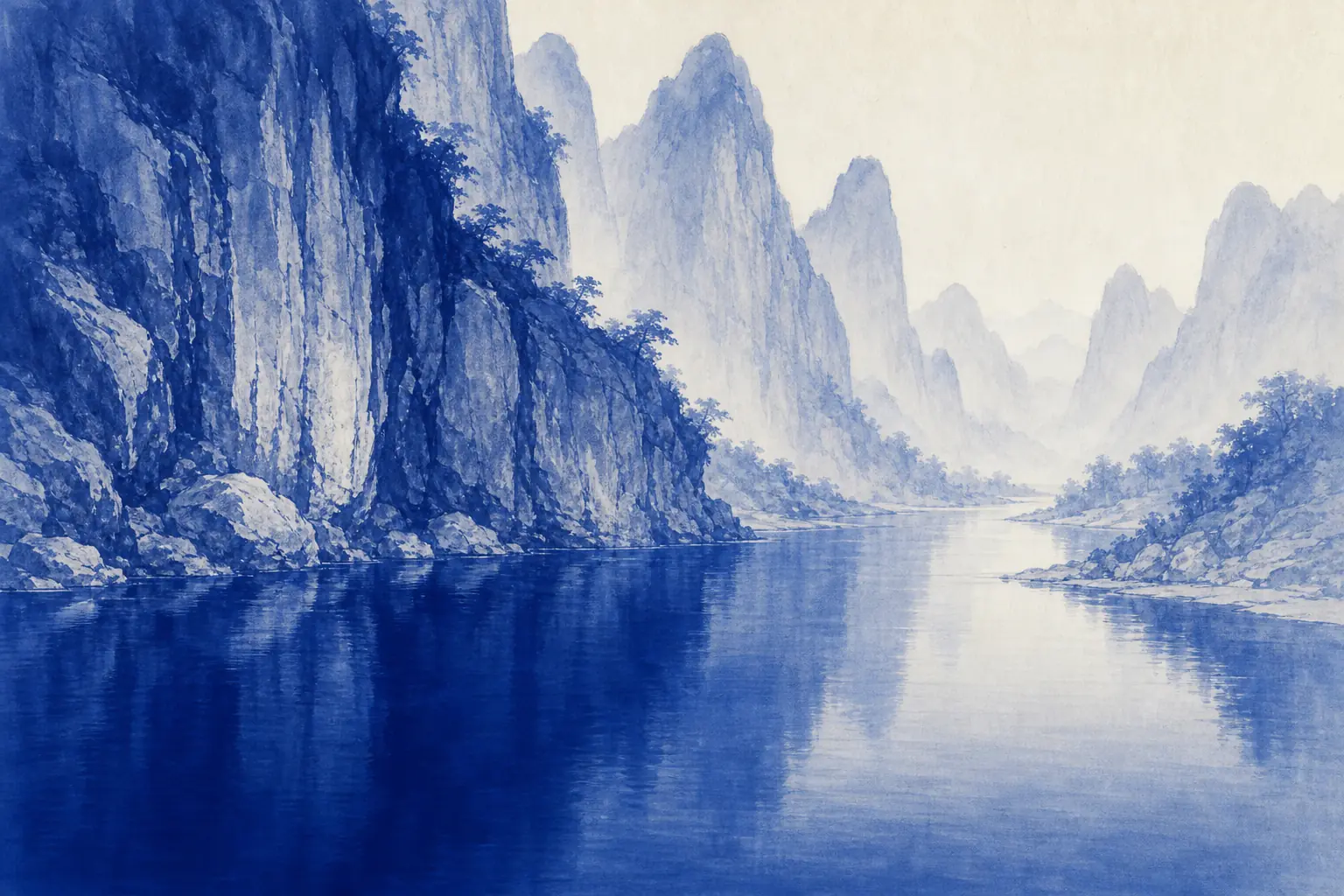
從安靜的詞語中生長出來的南方
帶著潮濕的感覺
巨大的蕨類植物,遮擋了雨水和光線
彎彎曲曲的小路,通向詩
一種奇特的啟示,向我們展示,那些
我們從沒見過的事物
又或許,一些並不存在的事物
在誘惑著我們
In 2023, in Taipei, The South began to take shape, emerging from these lines of poetry.
As the burning intensity of youth yields to the quietude of middle age, the poet dredges up the tender, enduring moments of a life. Through flashes of memory and silence, accompanied by sea winds, earthquakes, and fireworks across the island, the poems unfold a world where the small and the vast, the fragile and the strong, coexist.
The South gathers the poet’s experiences from childhood to middle age—from the 1980s to the present—and carries them across social institutions and beyond them, across the Taiwan Strait and between its shores. Chengdu, Beijing, Taipei, Shanghai, Lhasa, Hong Kong: these sites of historical and emotional force, vibrating against one another, shape a world of alternating light and darkness, emergence and disappearance, ebb and flow. Between hope and despair, vitality and the impulse toward destruction, the poetry resembles the deep sea—tranquil on the surface, yet charged with immense potential energy.
Amid Taiwan’s sea winds, the author wrote his “poem of Asia.” It is the first long poem to gather historical and lived experiences from both sides of the Taiwan Strait. Its energy spills beyond established configurations of reality, embodying both an active engagement with Asia and a form of consolation. Here, the long poem becomes a vessel large enough to hold the fullness of an individual world. Also included as a preface is “Even Dust Possesses the Substance of the Vajra,” which traces the trajectory and vision through which the poem came into being.
Situated between poetry and reality, The South seeks to be more than a collection of poems. It is also a book of tools—not only something to be read, but something to be used. Through the currents of energy that run through it, emotional and intellectual nodes can be opened, a subtle yet vital force awakens. Within that flow, the poetic nature of the individual emerges; and within that poetry, new realities take shape.


